
Reverse Image Search Scammer Photos — Stop Fraud Before It Starts
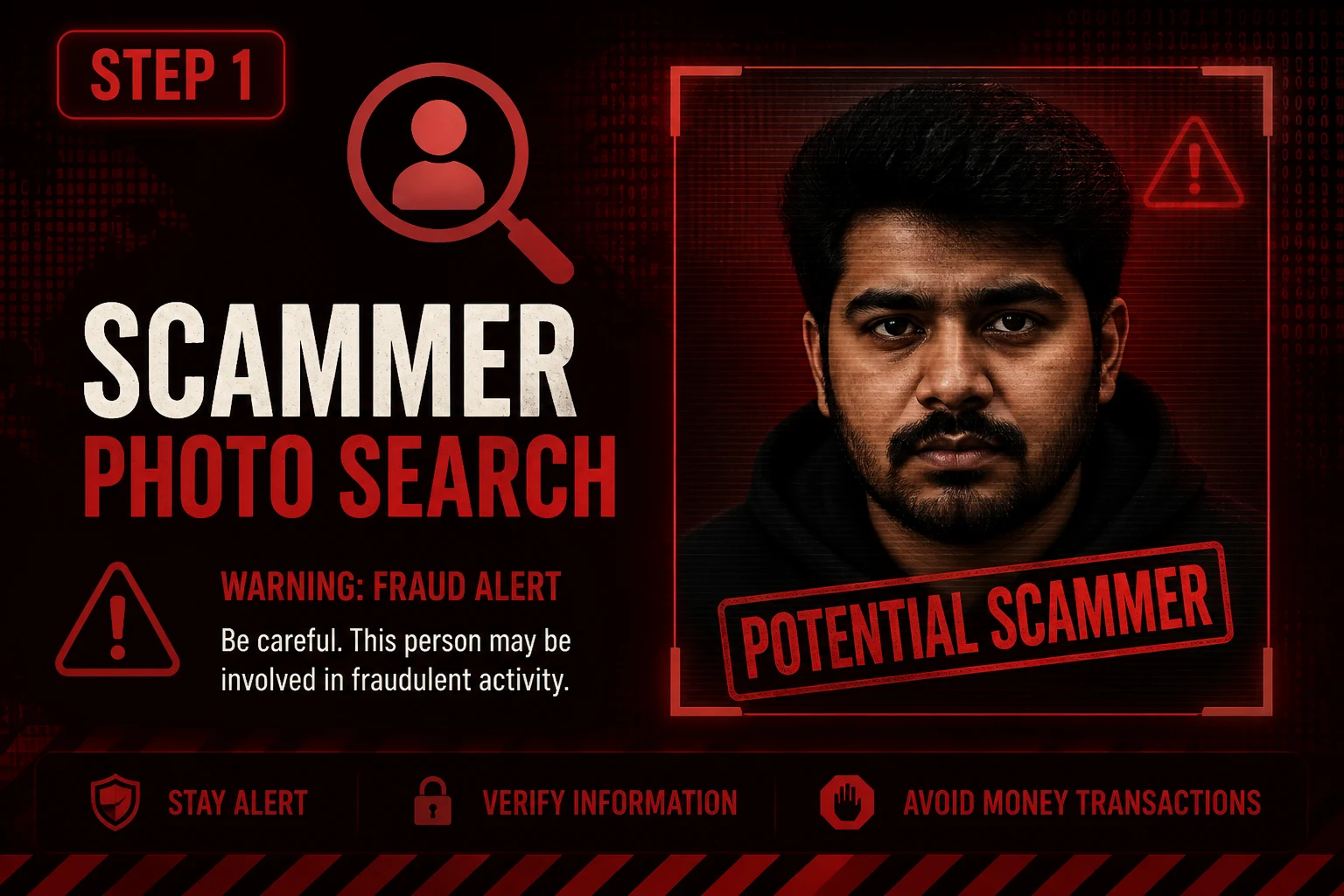
The vast majority of online scammers steal their profile photos from Instagram models, military personnel, and stock sites — images that are publicly indexed and traceable. FaceFinderLens reverse image search maps a suspect photo against billions of public images, surfacing every linked profile, original source, and name mismatch. Whether you're dealing with a romance scam, investment fraud, or marketplace deception, a 30-second photo check can save you thousands.
Who Uses Scammer Photo Search
From dating apps to crypto investment fraud — see how a single photo check exposes the scam.
Romance Scam Investigation
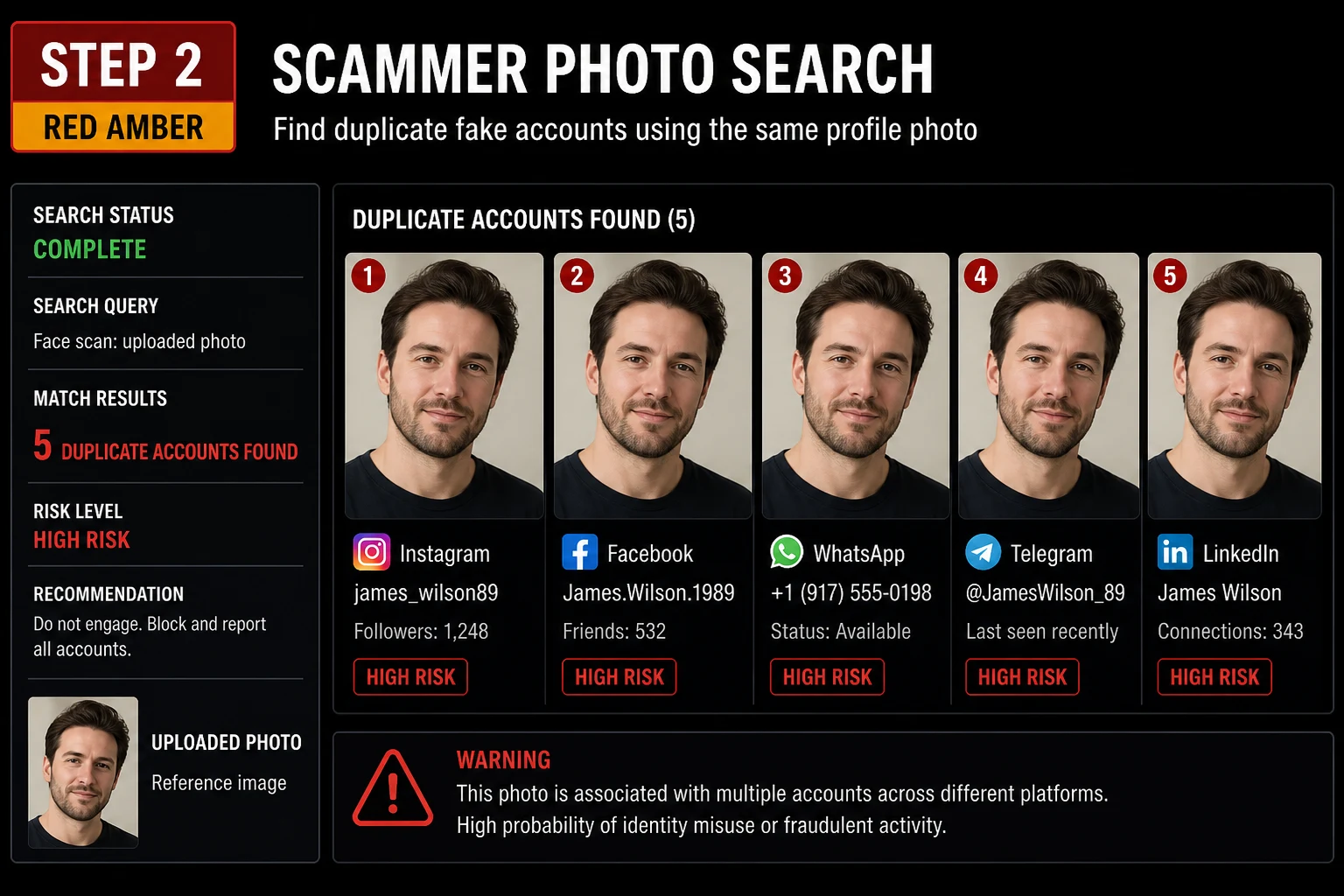
Fraudsters posing as romantic partners on dating apps or social media reuse the same stolen photo across hundreds of fake profiles. One search can link dozens of fake personas and reveal the real person whose photo was stolen.
- Identify stolen military and model photos
- Surface name mismatches across platforms
Investment & Crypto Fraud
Pig-butchering scammers and fake financial advisors use polished LinkedIn-style headshots stolen from real professionals. Verify that the "advisor" reaching out to you is who they claim to be before you transfer any funds.
- Expose fake advisor and mentor profiles
- Cross-reference with the AI image detector
Marketplace & Classified Fraud
Scammers lift seller profile photos from legitimate listings and influencer accounts to build credibility. A reverse image search confirms whether the photo belongs to the person you're dealing with before money changes hands.
- Flag copied listing and seller images
- Pause high-risk transactions early
Why FaceFinderLens for Scammer Photo Search
Link One Scammer Photo to Every Fake Account
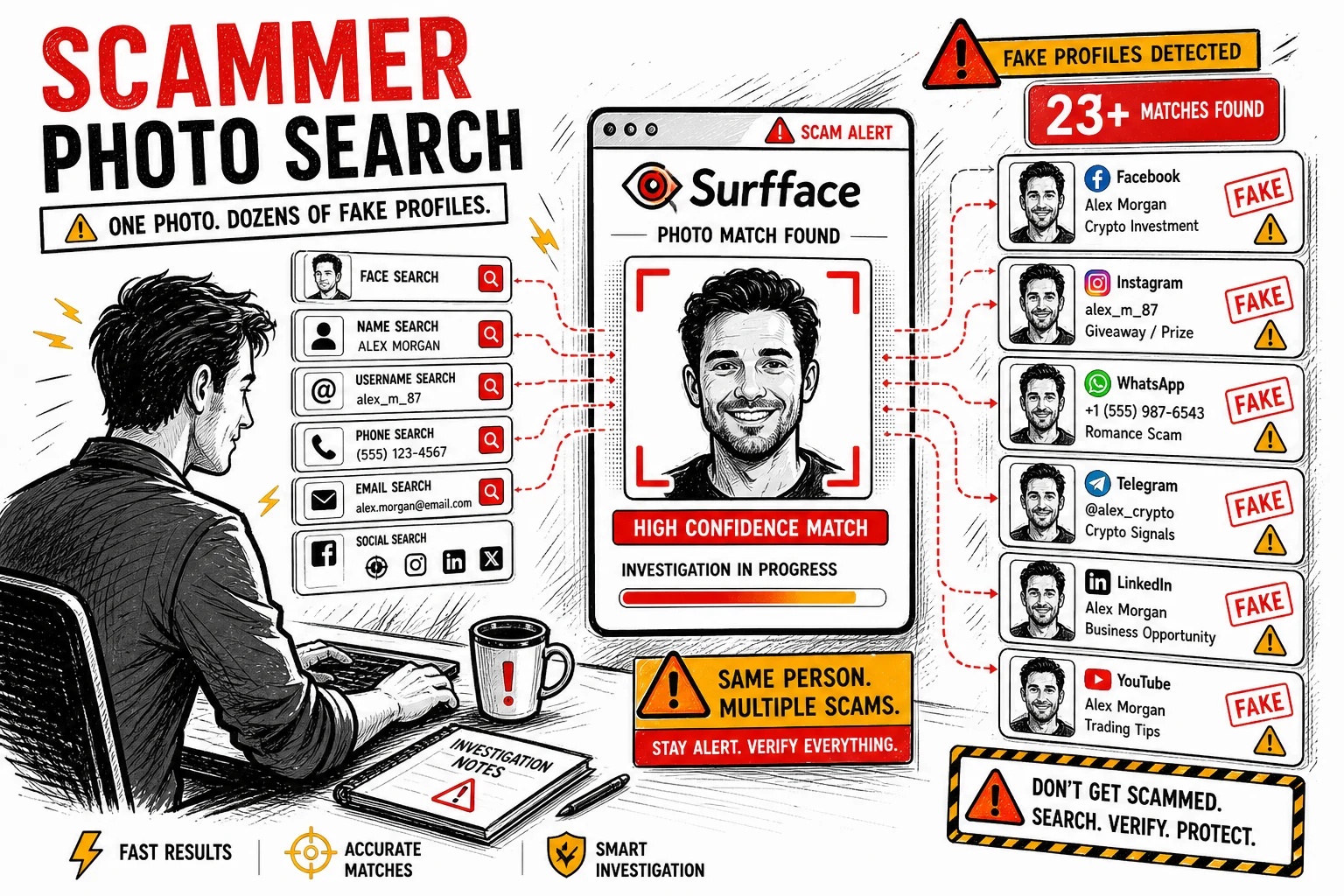
Professional fraud rings reuse the same stolen headshots across hundreds of profiles — on dating apps, marketplaces, and social platforms. Scammer photo search traces a single suspicious image to every linked appearance online, helping fraud teams, victims, and investigators build evidence chains before money is lost.
- Surface duplicate personas from one upload
- Export-ready URLs for abuse and fraud reports
Built for Fraud Investigation — Not Generic Image Search
General search engines match pixels; scammers crop, filter, and compress photos to evade them. FaceFinderLens uses face recognition to follow the same person across variations — and focuses on the fraud patterns that matter: stolen military photos, recycled model headshots, and marketplace seller images copied from real influencers.
- Pair with the AI image detector to verify identity
- Honest empty states when data is unavailable
Frequently asked questions
Will the scammer know I searched their photo?
No. Reverse image searches are entirely anonymous. The person who sent you the photo has no way of knowing you ran a check.
What if no results come back?
A lack of results doesn't confirm the photo is genuine. Scammers sometimes use private or recently stolen images that haven't been publicly indexed yet. If other red flags are present — too-fast emotional escalation, requests for money, refusal to video call — treat the situation with caution regardless.
How do I find scammer photos online?
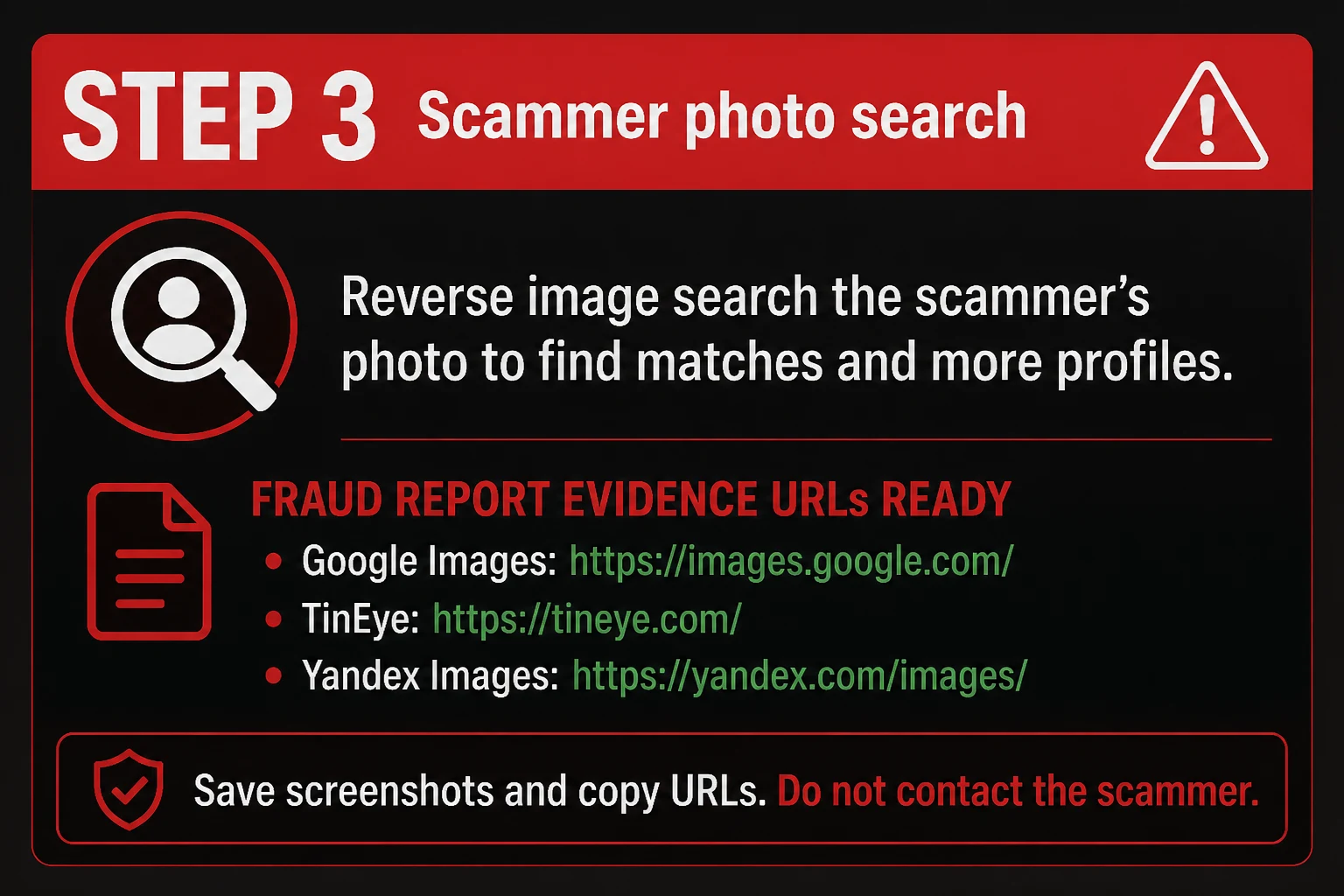
Save or screenshot the suspicious profile photo, then upload it on this page. FaceFinderLens's AI scans billions of publicly indexed images for the same face. If the photo is stolen, it will likely surface under a different name, on a stock site, or linked to another account.
How is this different from Google reverse image search?
Google Images matches by pixel similarity and focuses on broadly crawled pages. FaceFinderLens uses AI face recognition to identify the same person even when a photo has been cropped, resized, or filtered — and searches social profiles and public databases that general search engines often miss.
Can I report the scammer after finding evidence?
Yes. In the US, report romance and investment scams to the FTC at ReportFraud.ftc.gov and the FBI Internet Crime Complaint Center (IC3.gov). In the UK, report to Action Fraud. Attach the matching URLs our search surfaces as evidence to accelerate platform takedowns.
Guides & resources
Read in-depth guides that match this tool — tips, statistics, and step-by-step walkthroughs.