
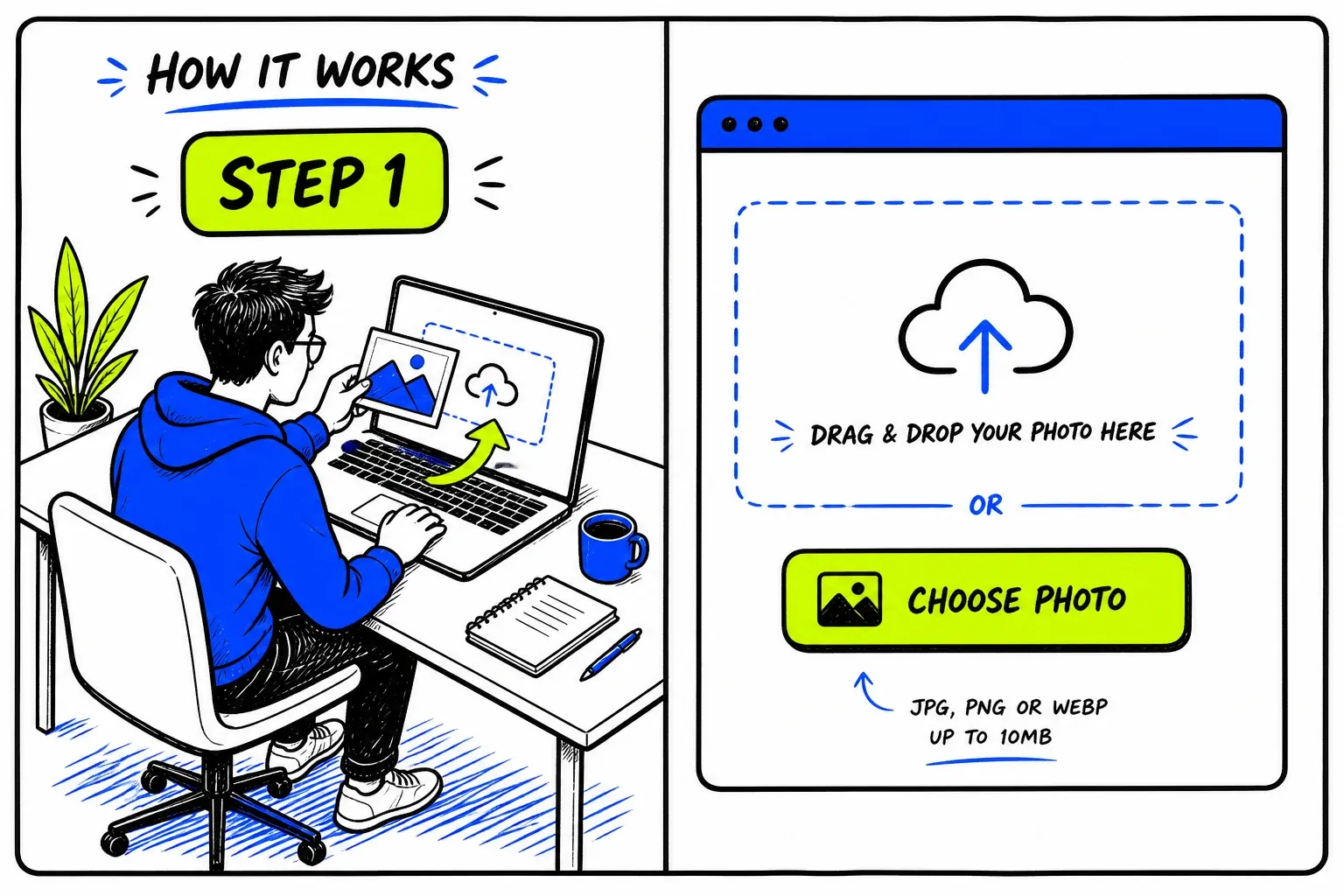
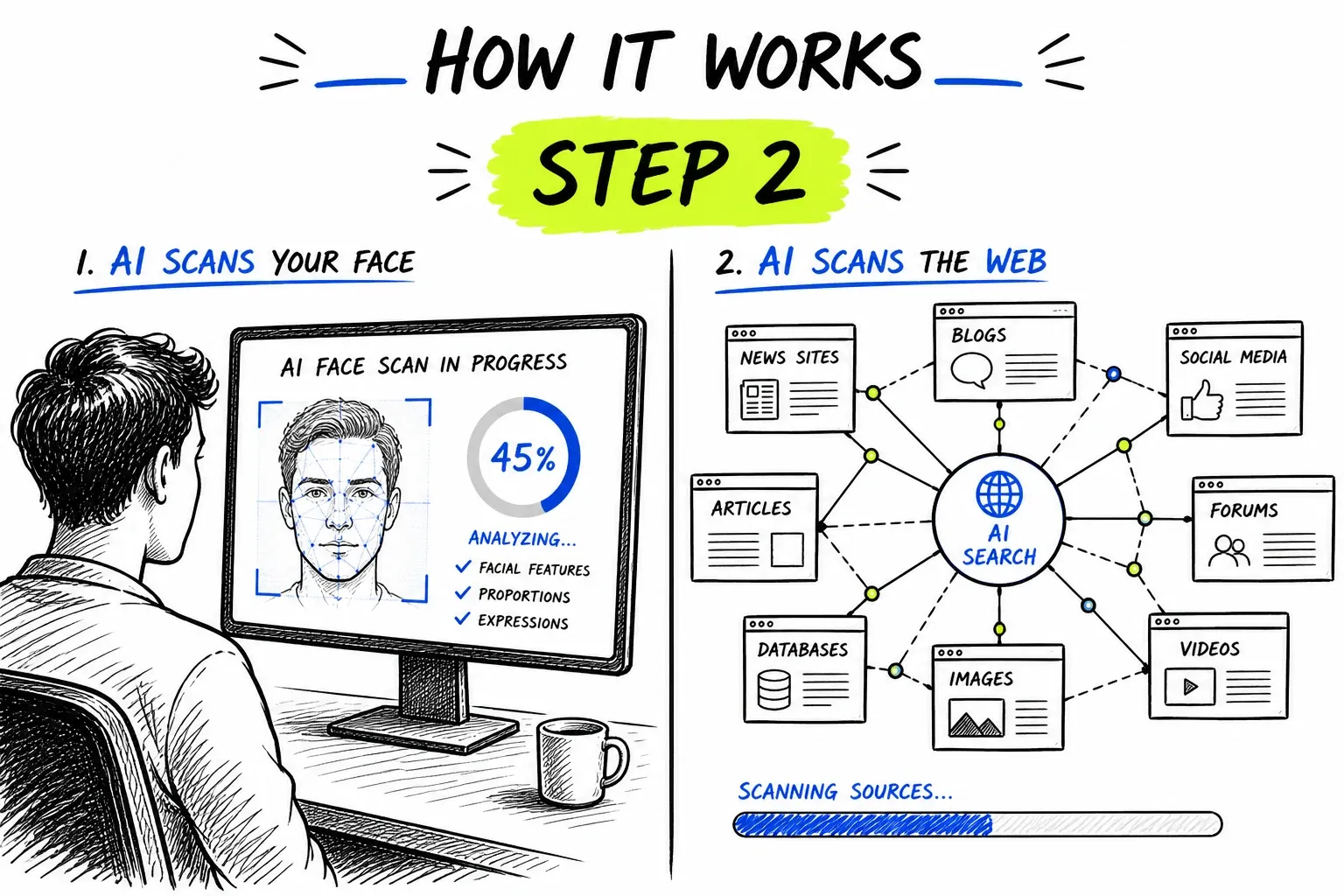
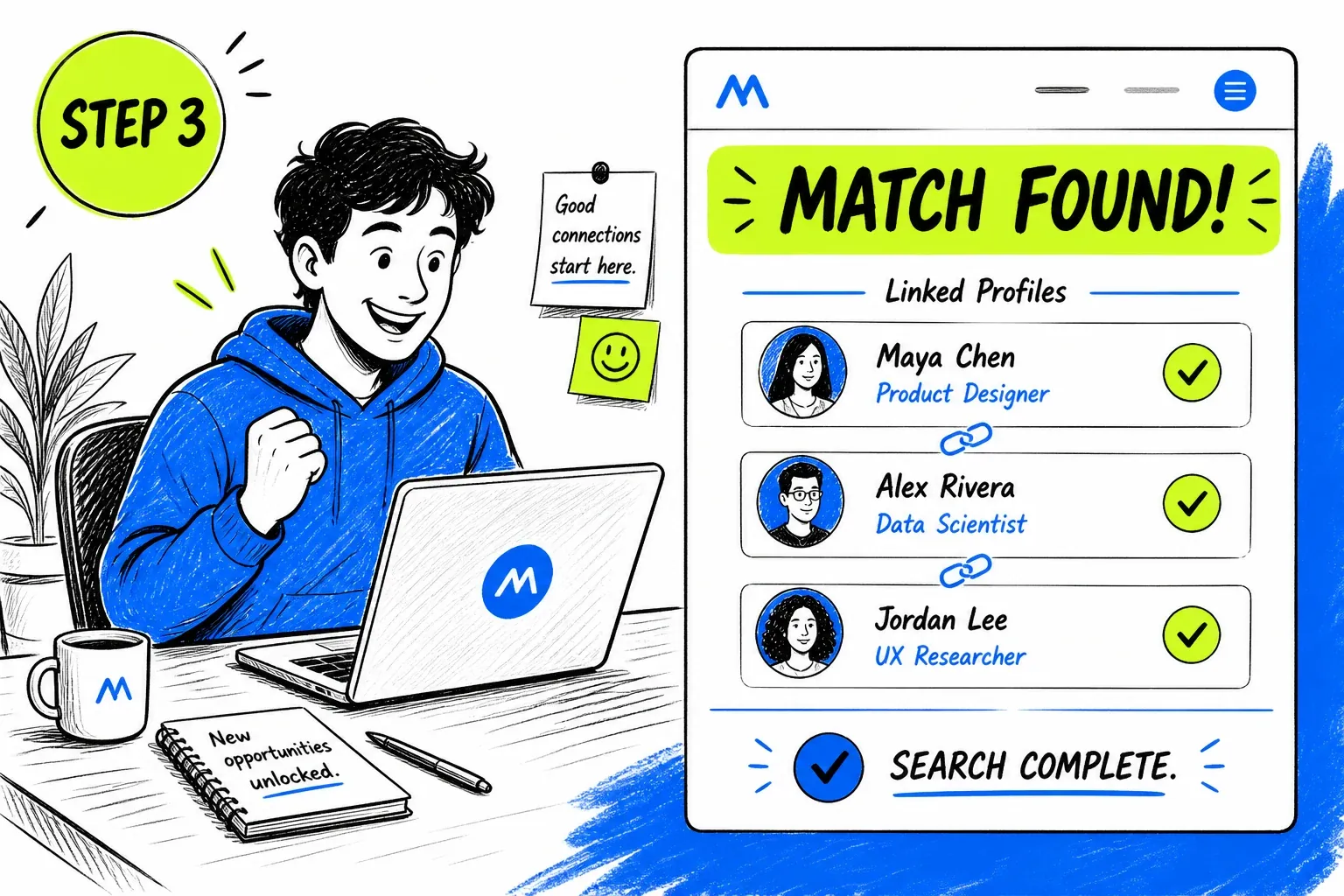
What Is a X Face Search?
X is pseudonymous by design, so nobody expects a display name to be a real name. That changes the question. Rather than trying to identify an account holder, the productive use is checking whether a face has been borrowed — the same headshot appearing across several accounts, or tracing back to a stock library, is the standard signature of a coordinated or fraudulent operation.
Worth being precise about the mechanics: this does not query X directly, and no tool honestly can. It searches an index built from publicly reachable pages — which is where X profile images and public posts end up once they are crawled. The same engine powers our general face search tool; this page covers what it does and does not reach on X specifically.
What Is Actually Public on X
X publishes avatars openly, which is precisely why they get reused so heavily.
Avatars are public by default
Media in public posts
The sockpuppet pattern
Mirrors and archives
When a X Face Search Helps
Identification is the wrong goal here. Detecting reuse is the achievable one.
Check a Crypto or Investment Account
Accounts pushing financial opportunities routinely wear a borrowed professional headshot. If the same face runs several accounts, or traces to stock, that settles it.
- Stock portraits surface immediately
- One face, many accounts is the tell
Spot a Coordinated Account Network
Researchers and moderators use face reuse as one signal that a cluster of accounts is operated together rather than independently.
- Document each source URL
- Treat it as one signal among several
See If Your Photo Is on an Account You Do Not Run
Impersonation accounts are common, particularly for anyone with a public profile. Searching your own photo finds accounts wearing your face.
- Gather evidence for a report
- Catches re-cropped copies
Verify a Photo Being Shared as News
When a photo circulates attached to a claim about a person, a face search can show whether that image has an older, unrelated history.
- Find earlier appearances of the image
- Check the date on each source page
Getting a Usable Photo Off the Platform
X avatars are among the smallest images on any major platform, so capture carefully.
- Open the avatar full-sizeClicking the profile picture expands it well beyond the small circle shown in the timeline. Always capture from the expanded view.
- Prefer a photo from a postIf the account has posted a clear photo of the same person, that image will almost always be larger and better than the avatar.
- Check the banner imageHeader images are wide and high-resolution. If the person appears in theirs, crop to the face and use it.
- Ignore non-face avatarsCartoons, logos, and generated art contain no measurable face. There is nothing for a face search to work with.
The general rules — sharp, evenly lit, front-facing, one face per search — apply here too. They are covered in more depth on the face search guide.
Running a X Face Search Here
Reuse Detection, Not Unmasking
We do not claim to identify pseudonymous account holders, because that is not something a similarity index can honestly deliver. What it does well is show you the same face on other pages, with links, so a pattern of reuse becomes visible and checkable.
- Every match links to its source
- Similarity scores you weigh yourself

Works From Low-Resolution Input
Matching on facial geometry rather than pixels means a small, compressed avatar can still connect to a larger, cleaner copy of the same face elsewhere — which is usually where the useful context is.
- Handles crops, rescaling, and compression
- One credit balance across every tool
Coverage Limits on X
Pseudonymity is the platform's design, not a gap to be closed.
- It will not unmask an anonymous account
- If the person behind an account has no public photo elsewhere, no face search will produce their identity. That is the intended behaviour of a pseudonymous platform.
- Avatars are very small
- X serves profile pictures at low resolution, often leaving too little detail for a confident measurement.
- Many avatars contain no face
- Logos, illustrations, and generated images are extremely common and are simply not searchable this way.
- Protected accounts publish nothing
- Accounts set to protected keep their posts off the open web, though the avatar itself may still be public.
- Generated faces have no history
- Synthetic portraits are increasingly common on throwaway accounts and will legitimately return nothing, because they never existed anywhere before.
- Reuse is a signal, not a verdict
- One face across accounts is strong evidence of something, but confirm the sources before drawing a conclusion in public.
Privacy and Responsible Use
This searches publicly published material. It does not access X accounts, protected posts, or direct messages, and it cannot retrieve anything the platform keeps private.
Your uploaded photo is passed to our search provider to run the query and removed from our servers immediately afterwards. Searches are not published, and nobody is notified.
Pseudonymity protects journalists, activists, whistleblowers, and people at genuine risk. Attempting to attach a real identity to an anonymous account can cause serious harm, and that is not a use this tool is offered for.
Before you search
- Only upload photos you have the right to use.
- Have a reason you would be comfortable stating out loud.
- Treat every match as a lead to check, never as a confirmed fact.
- Never use results to contact, follow, pressure, or expose someone.
- Do not use this tool for employment, credit, housing, or insurance screening — it is not a consumer reporting agency.
- Report impersonation to X through their own reporting flow rather than acting on it yourself.
Frequently asked questions
Can you search X (Twitter) by face?
Not within X, which has no face search. You can search an X profile picture against publicly indexed pages — avatars, images from public posts, and the mirrors and archives that republish them.
Can a face search reveal who is behind an anonymous account?
Usually not, and you should be sceptical of anything claiming otherwise. It only finds public appearances of that face elsewhere. If the account holder has no public photos, there is nothing to find — which is exactly how pseudonymity is meant to work.
How do I check if an account is using a stolen photo?
Search the avatar and look at what comes back. A stock library result, or the same face on unrelated accounts under different names, both indicate the photo does not belong to whoever is using it.
Why did my X face search return nothing?
Most often the avatar was too small or compressed to measure, contained no real face, or belongs to someone with no other public photos. Generated portraits also legitimately return nothing.
Will the account know I searched their photo?
No. The search does not visit their profile or interact with X.
Where to Go Next
One index sits behind all of these — the difference is the question you are asking of it.
Guides & resources
Read in-depth guides that match this tool — tips, statistics, and step-by-step walkthroughs.