
Catfish Reverse Image Search — Expose Fake Profiles Before It's Too Late
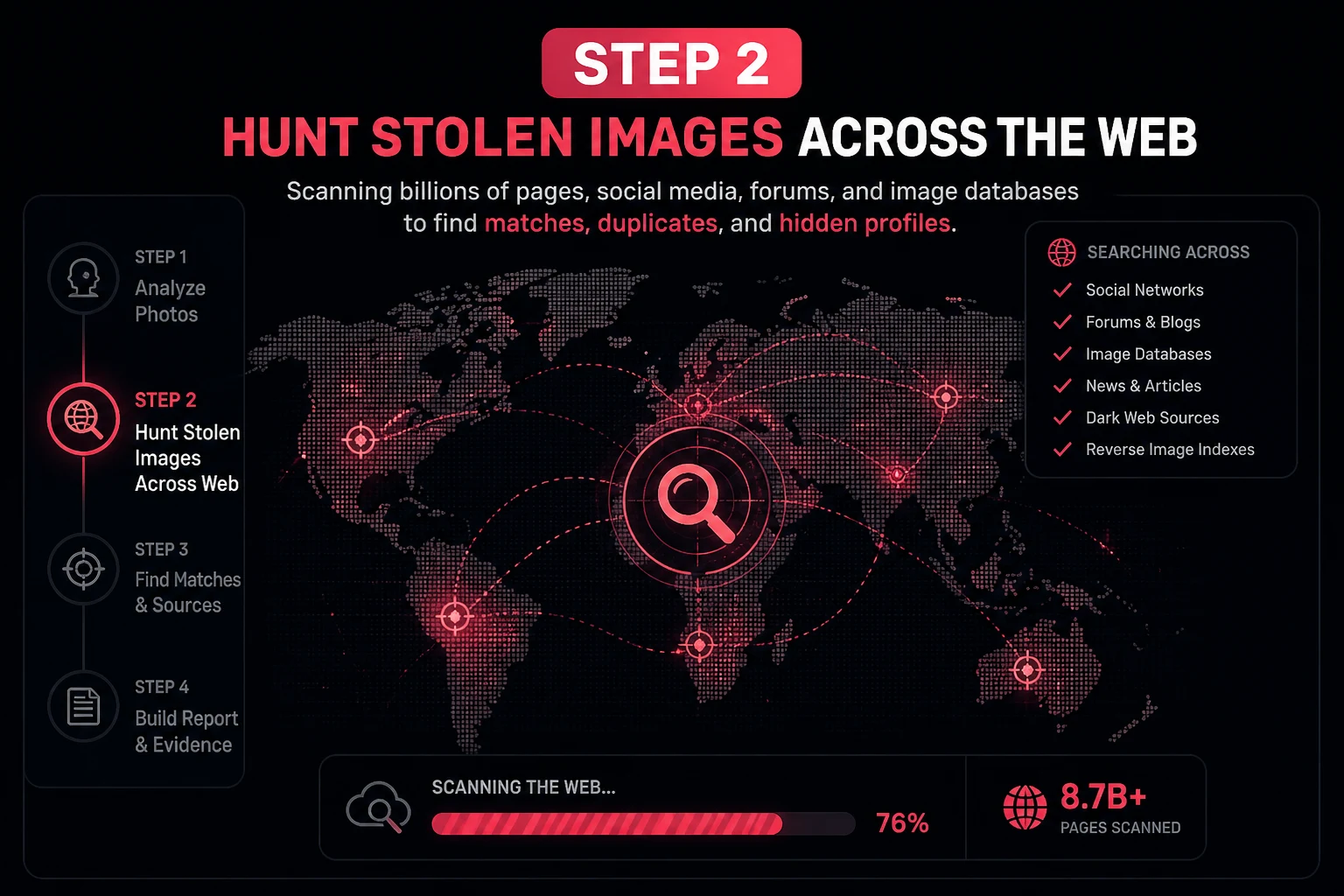
Catfishing costs victims thousands of dollars and months of emotional damage. Most catfishers steal their profile photos from Instagram models, fitness influencers, or military personnel — photos that are publicly indexed and traceable. FaceFinderLens catfish reverse image search runs a face-based scan across billions of publicly indexed images, surfacing every other online location that photo appears — so you can cross-check names, spot recycled identities, and make informed decisions before you share anything personal.
Catfish Reverse Image Search Use Cases
From dating apps to social media DMs — see how a 30-second photo check protects you.
Dating App Profile Verification
Before investing time and emotion into an online relationship, verify the profile photo is real. Upload the picture from Tinder, Bumble, Hinge, or any chat app and see whether the same face appears under a different name elsewhere online.
- Works with screenshots from any app
- Results in seconds — no account required
Social Media & DM Safety
Unsolicited friend requests, Instagram DMs, and LinkedIn messages from strangers can be the first step in a catfish scheme. A quick reverse image search confirms whether the profile picture is authentic or stolen from someone else's public account.
- Flag stock-photo and influencer photo theft
- Surface linked accounts using the same face
Collect Evidence to Report Fake Accounts
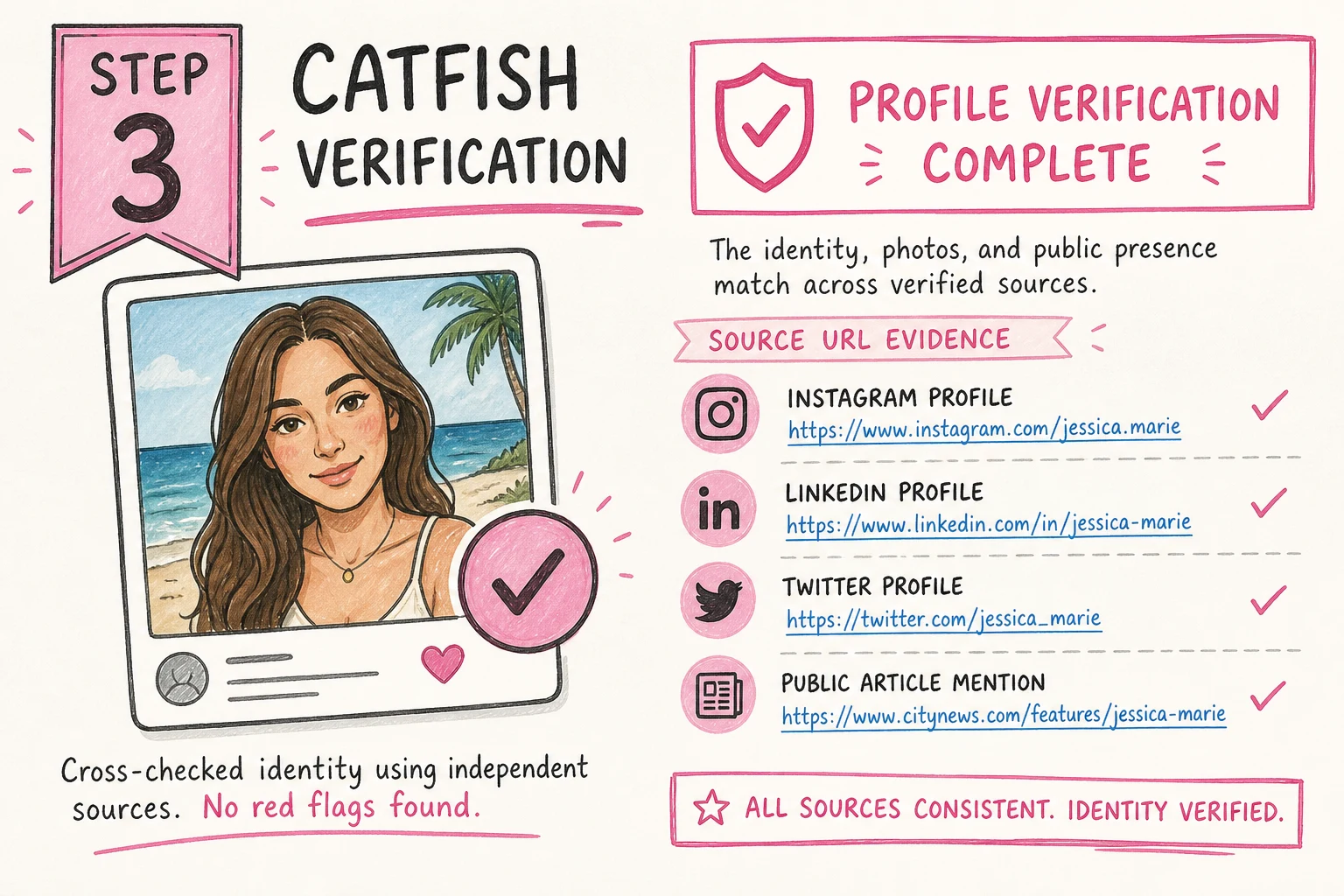
Platforms require specific evidence before removing fake profiles. Our search surfaces the original source of a stolen photo along with direct links — giving you concrete documentation to attach to abuse reports for faster takedowns.
- Direct URLs to where the photo originally appeared
- Evidence-quality output for platform reports
Why FaceFinderLens for Catfish Reverse Image Search
Expose Catfish Before They Gain Your Trust
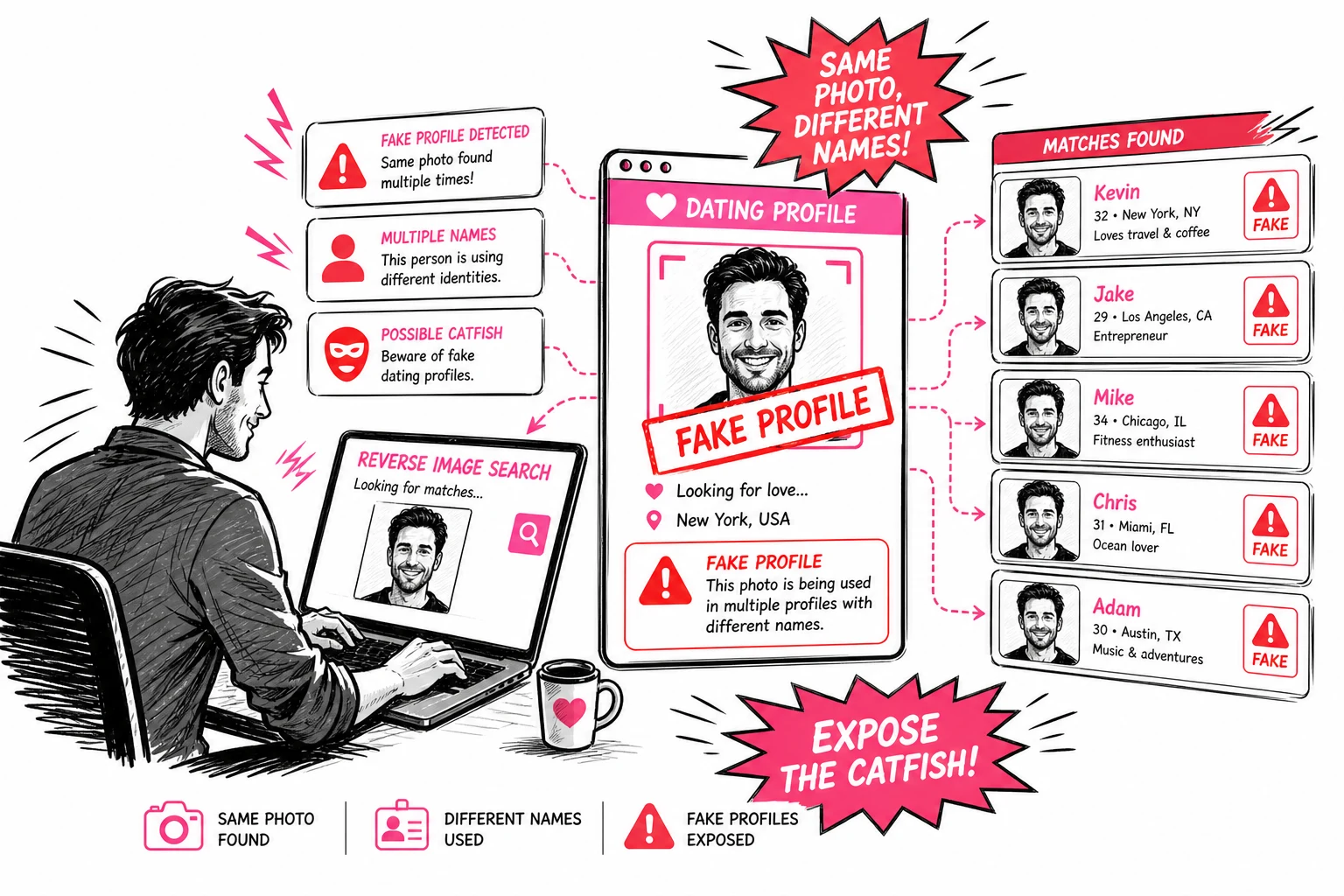
Catfishers depend on victims never checking their photos. A catfish reverse image search compares a suspicious profile picture against billions of indexed public images — revealing when the same face belongs to a different person, appears on stock sites, or is tied to unrelated accounts. One search can collapse an entire fake persona built on a stolen image.
- Designed for dating-app and social DM screenshots
- Evidence links for platform abuse reports
Stolen Photos Are the Easiest Catfish Clue to Verify
Emotional manipulation is hard to spot in real time — but stolen photos leave a digital trail. When FaceFinderLens finds the original source of a profile image or the same face under another name, you have objective proof that the person you're talking to may not be who they claim — without confronting them directly.
- AI face matching — not just pixel similarity
- Results in seconds from public indexes only
Frequently asked questions
How do I do a reverse image search for catfishing?
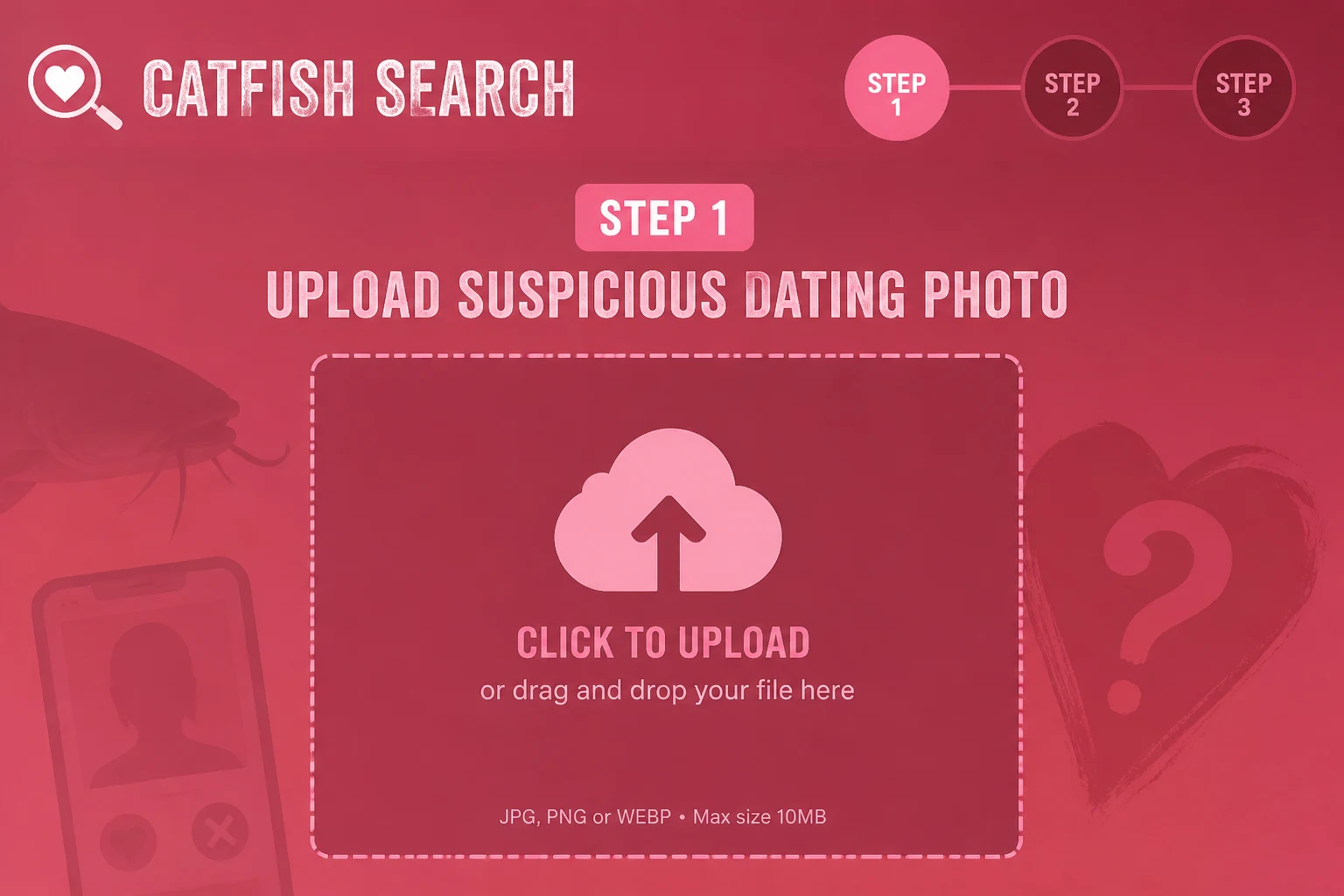
Save or screenshot the suspicious profile photo, then upload it on this page. FaceFinderLens's AI scans the public web for other appearances of the same face. If the photo is stolen, there's a strong chance it surfaces under a different name — exposing the catfish.
Can I search a screenshot from a dating app?
Yes. Screenshots from Tinder, Bumble, Hinge, or any chat app work well. For best results, crop the image to focus on the face and use a clear, well-lit photo. Blurry or heavily filtered images reduce match accuracy.
What if the reverse image search returns no results?
A lack of results doesn't confirm the profile is genuine. Scammers sometimes use private photos that haven't been publicly indexed. Combine the search with other red-flag checks: video-call avoidance, too-fast emotional escalation, and requests for money or gift cards.
Is a reverse image search enough proof that someone is a catfish?
A confirmed match — where the same photo appears under a different name — is strong evidence of catfishing. However, treat it as one indicator among several. Use results alongside other context and report to the platform with the evidence you've gathered.
How is this different from Google reverse image search?
Google Images matches by visual pixel similarity and focuses on broadly crawled pages. FaceFinderLens uses AI face recognition to specifically identify the same person across different photos — including images where the photo has been cropped, filtered, or resized — and searches sources that general search engines often miss.
Guides & resources
Read in-depth guides that match this tool — tips, statistics, and step-by-step walkthroughs.