
AI Image Detector — Know If a Photo Is Real or Artificially Generated
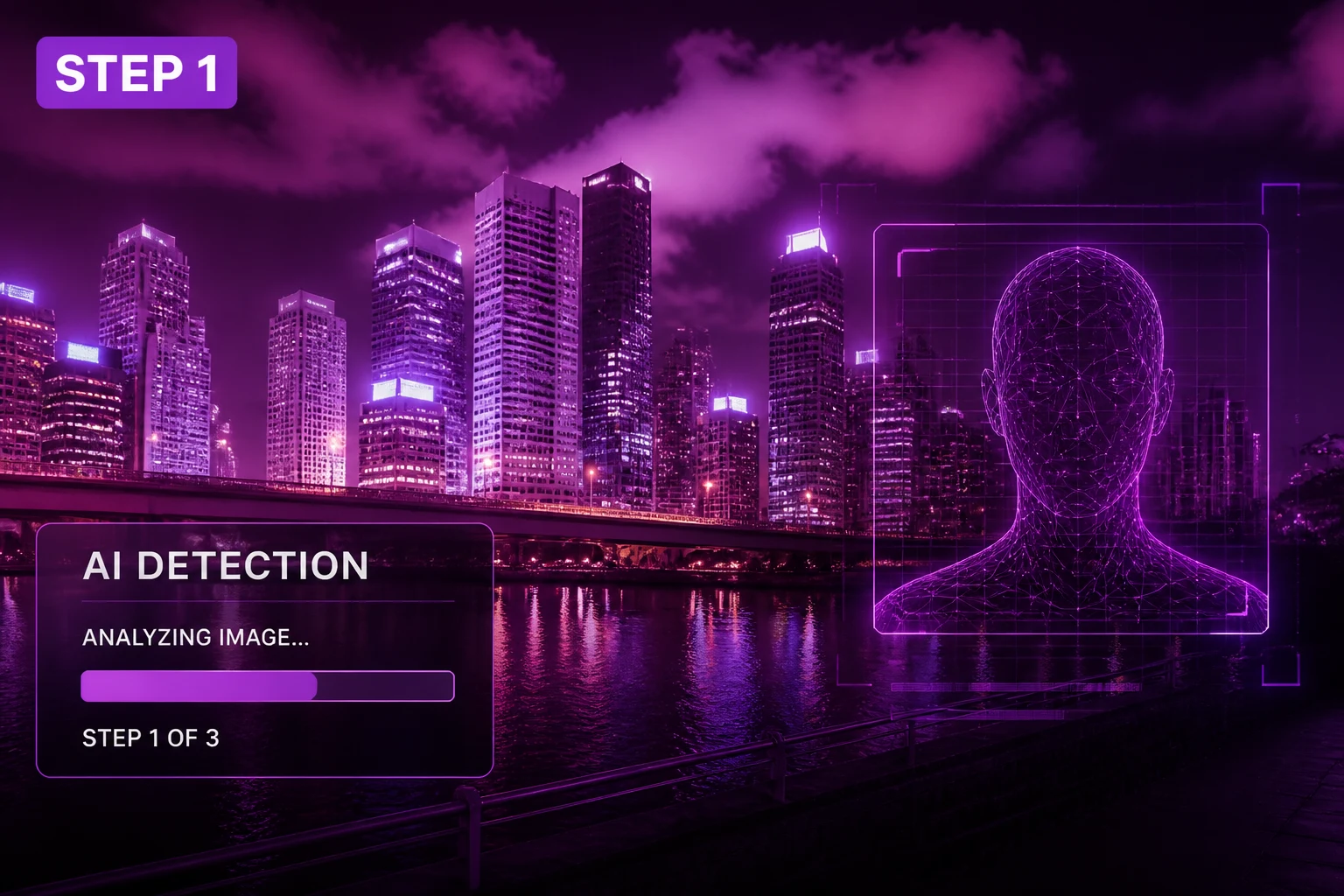
AI-generated profile photos have become one of the most powerful tools for online deception. Tools like Midjourney, DALL·E, and Stable Diffusion can produce photorealistic faces of people who don't exist — making it impossible to trace a stolen identity. FaceFinderLens helps you detect AI-generated and manipulated images through advanced visual analysis. When a face returns no web matches, our AI imaging analysis can identify the telltale visual signatures of synthetic generation — giving you a fuller picture of whether the person you're dealing with is real.
AI Image Detector Use Cases
From dating app photos to business headshots — know if you're looking at a real person or an AI-generated fake.
Dating App AI Photo Detection
AI-generated faces are increasingly common on dating apps. Unlike stolen real photos, they have no web presence to find — but they do carry visual artifacts. Use our AI image detector to identify synthetic profile photos before you invest emotionally.
- Identify GAN and diffusion model face artifacts
- Use alongside face search for complete verification
Social Media Fake Account Detection
Bot networks and influence operations often use AI-generated headshots for fake social media accounts. An AI image detector helps you identify these synthetic profiles before engaging with or amplifying their content.
- Spot AI face artifacts in profile photos
- Identify fake accounts before retweeting or sharing
Journalism & Fact-Checking
Verify whether a photo submitted as evidence or shared as news is genuine or AI-generated. Essential for newsrooms receiving unsolicited tips, social media teams monitoring trending images, and fact-checkers investigating viral content.
- Document your verification process
- Pair with reverse face search for full provenance
Business & Hiring Due Diligence
Verify that headshots submitted by job applicants, contractors, or business contacts are genuine photographs and not AI-generated profile images designed to create a fictional but convincing identity.
- Check submitted headshots before interviews
- Combine with reverse face search for full verification
Deepfake & Manipulation Detection
Detect not just fully AI-generated images, but also manipulated photos where a real face has been altered, replaced, or digitally enhanced in ways designed to deceive.
- Identify facial manipulation artifacts
- Detect face-swap and deepfake signatures
Marketplace & Classified Fraud
Scammers increasingly use AI-generated seller profile photos to avoid the risk of stolen real photos being traced. Detecting AI-generated images adds an extra layer of fraud protection for marketplace transactions.
- Spot AI profile photos in marketplace listings
- Pause transactions from synthetic-profile sellers
Why FaceFinderLens for AI Image Detection
Spot AI-Generated Faces Before You Trust a Profile
Synthetic profile photos are the new catfish — faces that look real but belong to no actual person. AI image detection combines visual analysis with face search: when a photo has no web history and shows generative artifacts, you get a clearer picture of whether you're dealing with a real human or a fabricated identity.
- Flag GAN and diffusion-model face artifacts
- Use alongside reverse face search for full checks
Deepfakes and Synthetic Media Are Rising Fast
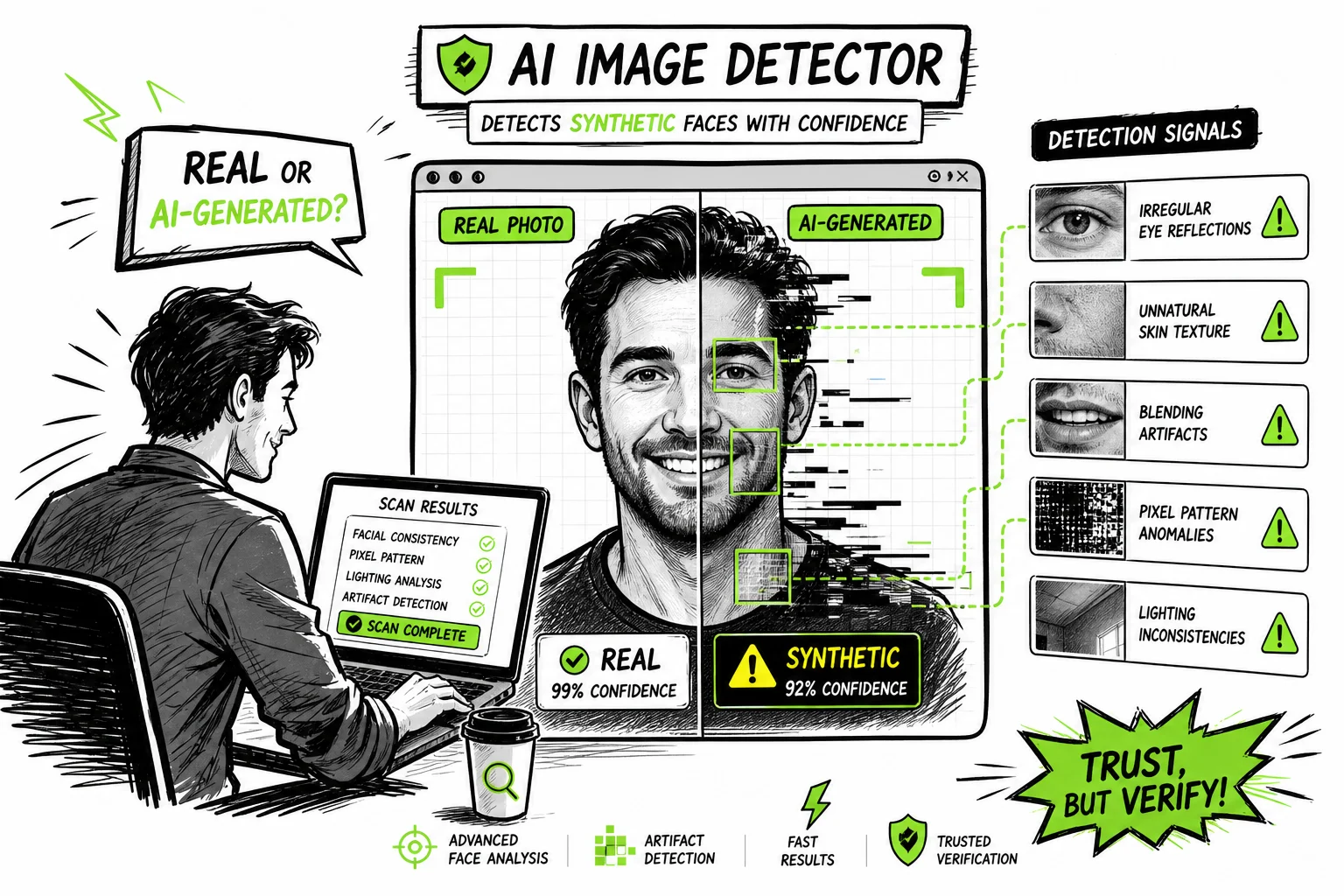
AI-generated headshots now appear on dating apps, marketplaces, and social bots. Unlike stolen real photos, they leave no trail on the web — but they do leave visual signatures. FaceFinderLens helps you question polished profiles that look too perfect, too smooth, or too inconsistent with video-call avoidance.
- Detect manipulation beyond full AI generation
- Designed for profile verification workflows
Frequently asked questions
How does an AI image detector work?
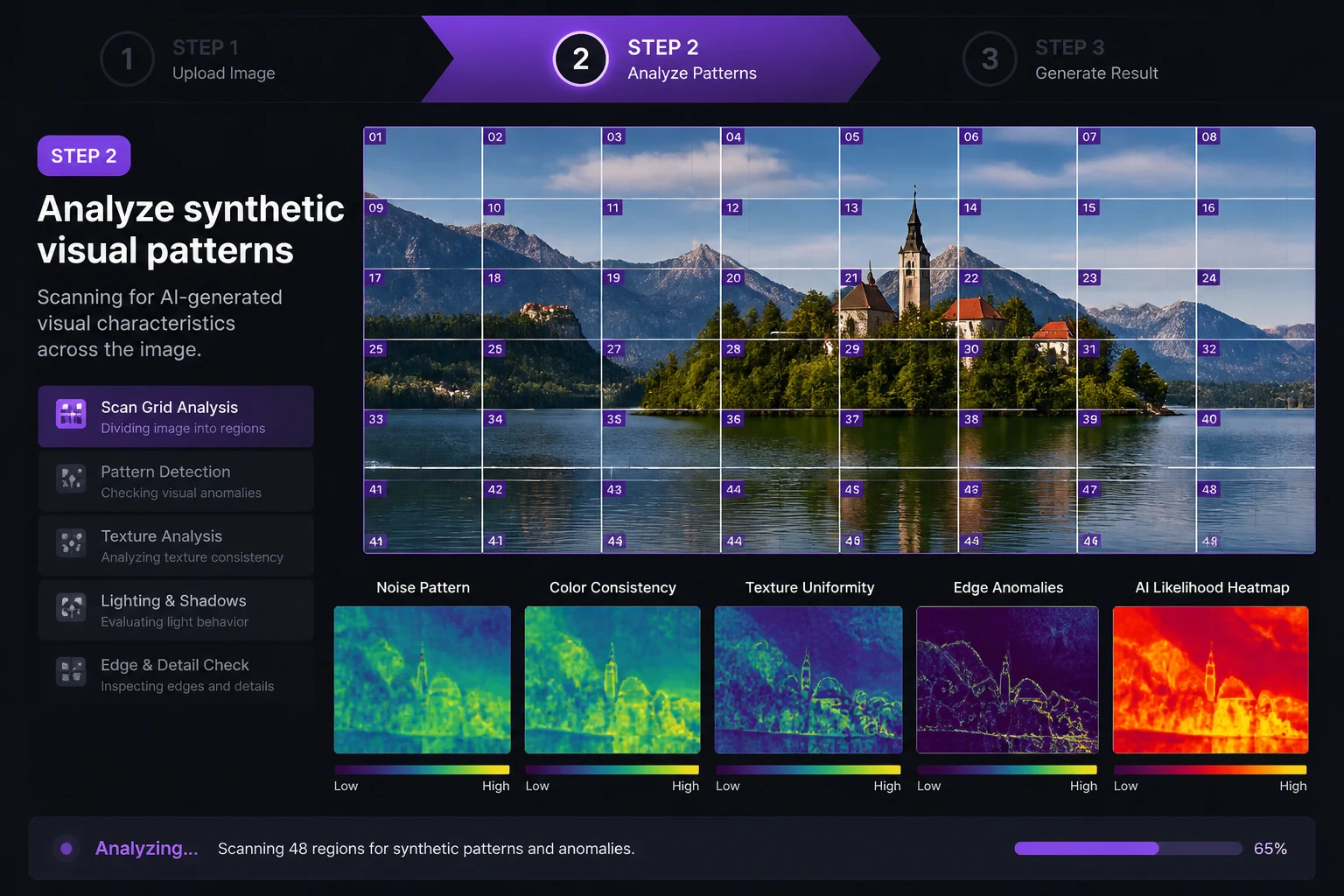
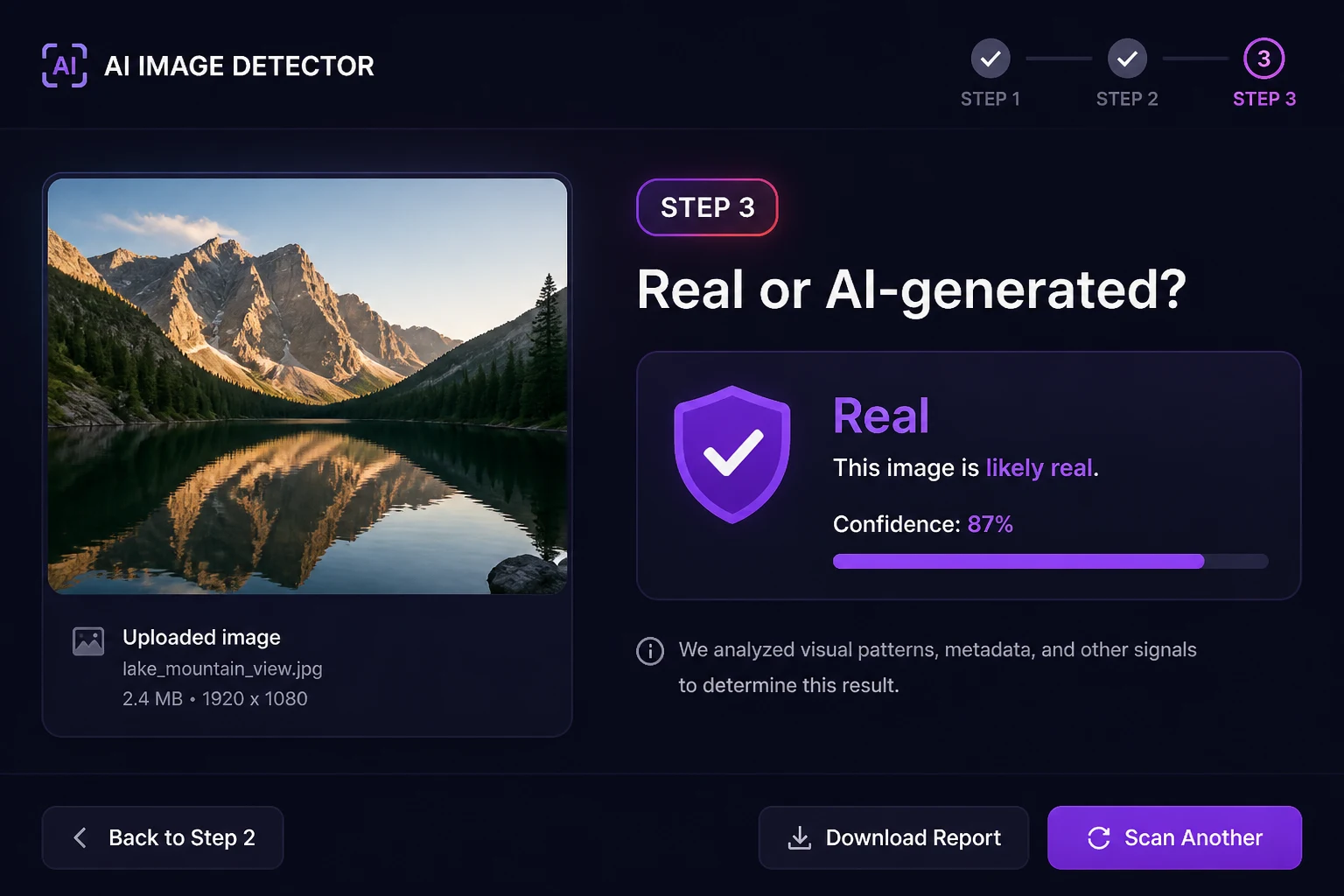
AI image detectors analyze visual patterns in a photo that are characteristic of AI generation — such as unnatural skin texture, inconsistent lighting, asymmetric features, or GAN-specific artifacts in backgrounds and hair. FaceFinderLens combines face search (no web presence is a red flag for AI-generated faces) with visual analysis to give you a more complete assessment.
Can AI-generated photos be detected reliably?
Detection accuracy has improved significantly but is not 100% guaranteed. Newer AI models (especially diffusion models) produce increasingly convincing images. The most reliable approach combines AI analysis with the absence of any reverse face search results — genuine people leave a photo trail online; AI-generated faces do not.
What should I do if I suspect a photo is AI-generated?
Run a reverse face search first — if the face appears nowhere online, that's a strong indicator the person doesn't exist. Then check for AI visual artifacts. If both checks raise red flags, treat the profile as potentially fake and report it to the platform.
Are AI-generated profile photos used by scammers?
Yes, increasingly so. AI-generated faces are harder to trace than stolen real photos because they don't belong to anyone. Scammers use them for dating profiles, fake business contacts, social media bots, and marketplace seller accounts. Combining an AI image detector with a reverse face search gives you the most complete protection.
What are signs of an AI-generated face?
Common visual signs include: overly smooth or waxy skin texture, asymmetric or blurred ear detail, unnatural hair (especially at edges), eyes that don't quite align or have unusual reflections, smeared or inconsistent background detail, and teeth that look unnaturally perfect or slightly merged. These artifacts are often subtle — automated detection tools give a more reliable assessment than the human eye alone.
Guides & resources
Read in-depth guides that match this tool — tips, statistics, and step-by-step walkthroughs.